Stop Burning Yourself Out: 10 Habits That Are Quietly Draining You
Burnout, a critical issue in today's work environment, often goes unnoticed until it becomes a significant barrier to productivity. Studies reveal that around 45% of workers experience burnout symptoms such as exhaustion, cynicism, and reduced professional efficacy. This phenomenon is exacerbated by factors like unrealistic work expectations, lack of autonomy, and inadequate social support.
Early recognition of these signs is crucial for maintaining well-being and preventing the onset of severe burnout. Implementing strategies such as setting realistic goals, practicing self-care, and fostering supportive workplace relationships can significantly mitigate risks. For instance, taking regular breaks throughout the day, engaging in physical exercise, or seeking mentorship from more experienced colleagues can enhance resilience against burnout.
"Ironically, many professionals believe they are invincible and push themselves harder precisely when their performance starts slipping due to burnout." — Workplace Wellness Expert
Treating Everything as Urgent
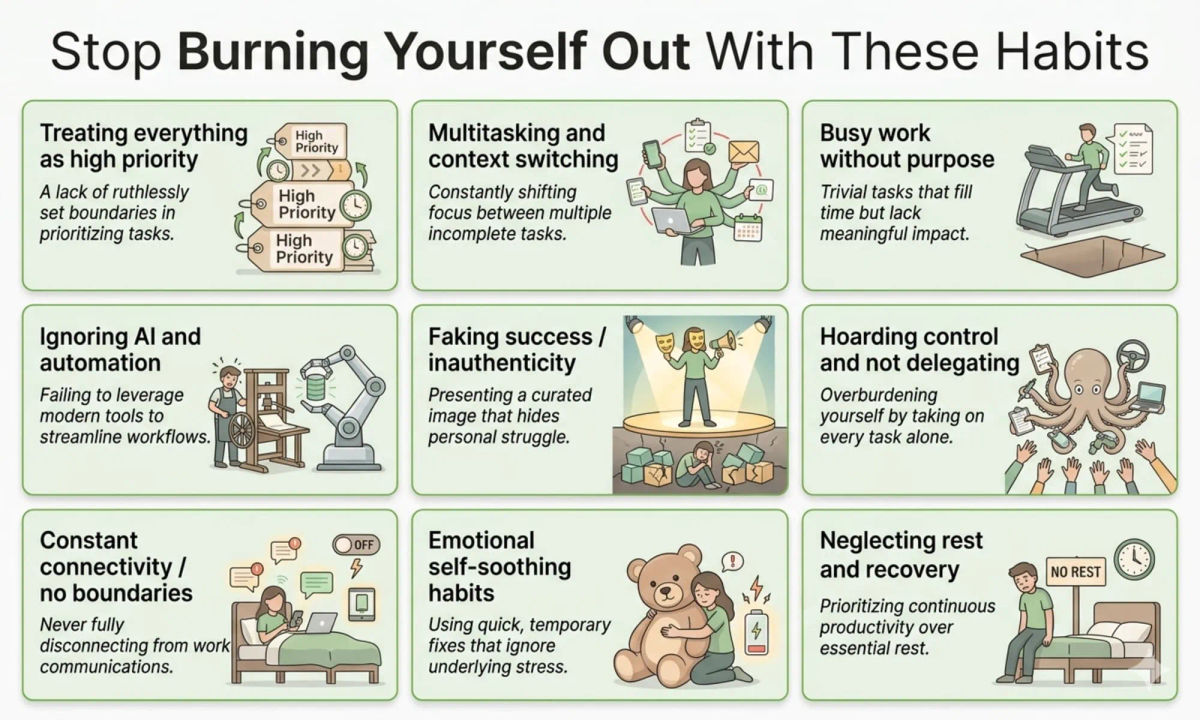
In modern life, many treat every task as an immediate priority, often mistakenly equating urgency with importance. This strains cognitive resources and diminishes productivity and well-being. Cognitive psychologists found that constantly switching focus can reduce mental efficiency by up to 40%, impacting long-term decision-making.
A project manager who treats every email as critical might seem efficient but often makes rushed decisions, missing deadlines for higher-priority tasks. Adopting a discerning attitude towards true urgency alleviates stress and enhances focus.
“Prioritizing based on true urgency rather than perceived busyness leads to personal peace and professional success.”
A nuanced perspective is that some level of urgency is inevitable and healthy for maintaining momentum, but distinguishing between tasks requiring immediate action due to their impact on goals or deadlines versus those merely feeling urgent because of frequency or volume is key. For example, a customer service representative can address numerous complaints promptly while setting aside time for less pressing issues that contribute to long-term client satisfaction.
Multitasking Depletes Focus
Despite the allure of productivity gains offered by multitasking, research consistently shows that it diminishes our ability to concentrate deeply. Switching between tasks repeatedly triggers a state known as cognitive overload, where the brain struggles to maintain focus and efficiently process information. This constant toggling not only wastes time but also increases stress levels significantly.
Imagine you're trying to write an important report while intermittently checking emails and responding to instant messages. Each context switch requires the brain to refocus, which consumes mental energy and can lead to a decrease in overall productivity. A study published in the journal Cognition found that people who multitask frequently perform worse on tests of cognitive control compared to those who don't.
"Multitasking is a lie we tell ourselves when we're too lazy to focus on one thing."
This nuanced view highlights how our perception of multitasking as an efficiency tool can be misleading. In reality, it often leads to poorer performance and diminished quality in work output. For instance, attempting to study for exams while listening to loud music or watching videos typically results in less effective learning and retention of material.
The Illusion of Productivity with Busy Work
It's easy to fall into the trap of filling your schedule with busywork, those low-impact tasks that seem productive but often leave you feeling drained. For instance, spending hours organizing emails or rearranging files can give a false sense of accomplishment without contributing significantly to your goals.
True productivity is about tackling meaningful work that moves you closer to your objectives. Research shows that people who focus on high-impact tasks are 23% more productive than those constantly switching between numerous minor duties. A practical example would be dedicating time each day to strategize and execute key projects rather than getting lost in trivial details.
This approach not only boosts efficiency but also enhances job satisfaction, as you feel a genuine sense of progress. Interestingly, one might argue that busywork can provide mental relief by reducing anxiety about more significant tasks through a sense of constant activity.
However, the long-term cost to your mental health and career advancement is substantial. Instead of focusing on low-value activities, prioritize deep work—like learning new skills or creating innovative solutions—that genuinely advance your career.
Ignoring Automation Tools Contributes to Burnout
The relentless pursuit of manual task completion, especially for mundane and repetitive duties, can dramatically reduce a professional's sense of accomplishment and satisfaction. Over time, this daily grind not only eats away at productivity but also leads to significant mental fatigue compounded by the constant awareness of inefficiencies, diminishing motivation and overall job fulfillment.
Consider Sarah, a marketing coordinator who spends hours each week manually updating customer records in various systems despite available automation tools due to fear of change or resistance to learning new software. Weeks turn into months, and her work enthusiasm wanes while stress levels rise. A Harvard Business Review study reports higher burnout rates among employees overworked and undervalued.
Automation tools streamline repetitive tasks, freeing up time for strategic activities that require human ingenuity and creativity. Professionals like Sarah can reclaim their work hours to focus on high-value initiatives such as analyzing market trends or crafting innovative marketing campaigns. Adopting these technologies boosts morale by fostering a sense of control over daily responsibilities. The long-term benefits outweigh the initial learning curve.
The Dangers of Maintaining a Perfect Work Persona
Maintaining a flawless professional persona is common among career-driven individuals but often leads to burnout and the suppression of vulnerability and authenticity. Authenticity fosters genuine connections and promotes long-term success.
Sarah, a marketing executive at a tech startup known for her impeccable presentations and meticulous attention to detail, embodies this struggle. She dedicates countless hours to maintaining an unblemished professional image, neglecting her personal life and health.
Her relentless pursuit of perfection leaves her reliant on caffeine and sleepless nights to meet her demanding work schedule. This lifestyle strains her physical well-being and impacts her mental health, decreasing creativity and innovation over time.
According to research published in the Journal of Occupational Health Psychology, employees who prioritize authenticity experience lower stress levels and higher job satisfaction. The irony lies in Sarah aiming for perfection to stand out but her overworked state compromising work quality. For instance, she missed an important client meeting due to exhaustion, causing significant setbacks for her team. This highlights how striving for a perfect persona can backfire, hindering professional growth and personal fulfillment.
The Pitfall of Hoarding Control in Leadership Roles
Leaders who refuse to delegate tasks create bottlenecks, causing burnout. This behavior hinders team growth, leaving members undervalued and unengaged. A tech startup CEO's insistence on reviewing every email led to a 30% increase in employee turnover within six months as junior staff felt frustrated with lack of autonomy.
Hoarding control limits leaders' ability to make informed decisions due to being overwhelmed by trivial details. Delegating tasks frees up mental space for strategic thinking and innovation. At a financial firm, a mid-level manager who began delegating noticed increased productivity and higher quality in strategic plans submitted by her team members. Effective delegation improves overall job satisfaction among employees.
A study published in the Journal of Managerial Psychology found that teams with leaders who delegate tasks experience higher morale and better performance metrics compared to those micromanaged. Leaders who trust their team foster an environment where creativity flourishes and individuals are motivated to exceed expectations.
The Impact of Constant Connectivity on Recovery
Constant connectivity has blurred professional responsibilities and personal relaxation, leading many to experience relentless work-related stress without breaks. A study by the American Psychological Association found that 42% of adults check emails or messages after bed, complicating disconnection efforts.
Sarah, a marketing executive, frequently checks work emails during weekends and evenings despite her best intentions to separate personal life from professional duties. Notifications disrupt her ability to recharge mentally, leading to burnout and decreased productivity at work.
Consequences extend beyond inconvenience; they significantly impact health and career trajectories. Chronic lack of recovery times diminishes cognitive function, creativity, and increases physical ailments like heart disease or diabetes. Psychological toll is severe, with higher incidences of anxiety and depression among those who do not maintain clear boundaries between work and leisure.
Masks for Stress: Emotional Self-Soothing Behaviors
When faced with overwhelming stress, many of us instinctively seek out distractions as a way to momentarily alleviate our discomfort. However, while these diversions might provide temporary relief, they often do little to address the underlying issues at hand. For instance, scrolling through social media can temporarily take your mind off problems, but it doesn't help you work through the root causes of your stress.
Research indicates that prolonged use of such coping mechanisms can actually exacerbate mental health challenges in the long run. In a study published by the Journal of Social and Clinical Psychology, participants who engaged less frequently with social media experienced significantly lower levels of anxiety compared to those who relied on it heavily as an emotional crutch.
Instead of masking your stress, consider adopting more constructive self-soothing behaviors that directly tackle the sources of your distress. For example, practicing mindfulness meditation for just 10 minutes a day can dramatically improve your ability to manage stressful situations by fostering greater awareness and acceptance of your emotions.
The Role of Workplace Politics in Burnout
Workplace politics can be draining, forcing individuals to navigate a complex social landscape daily. In environments where perception trumps performance, employees find themselves entangled in interpersonal dynamics that lead to stress and anxiety. Sarah, an employee at a tech startup, observed powerful connections often securing promotions regardless of actual contributions, discouraging honest opinions and engagement. This fosters unfairness, contributing significantly to burnout among employees.
"In a toxic political environment, every day feels like a battle for survival rather than a chance to thrive."
Employees struggle when they cannot trust their work relationships or feel safe expressing themselves, facing immense psychological tolls as people grapple with both workload and treacherous social terrain. Studies show high levels of organizational politics correlate more with chronic stress and burnout than in less politically charged environments, including subtle manipulations like gossip and backstabbing that wear down resilience over time.
Even successful navigators suffer from burnout due to the constant vigilance required to maintain their position or climb the corporate ladder. Managers may spend more time managing relationships than focusing on work tasks, leading to inefficiencies and increased stress levels. Monitoring colleagues' actions and protecting oneself consumes valuable mental energy, further exacerbating burnout symptoms.
Neglecting Recovery as a Major Habit
The belief that constant productivity without breaks is a sign of strength can be misleading. Prioritizing rest and recovery is crucial for maintaining long-term health and performance; inadequate sleep, physical activity, and mental downtime lead to burnout and decreased cognitive function.
Sarah, a high-achieving business executive who worked 12-hour days without stopping, experienced chronic fatigue and a decline in decision-making skills. After incorporating regular short breaks, nightly sleep routines, and weekly relaxation sessions, she noticed aployees struggle when they cann improvement in both physical well-being and professional effectiveness.
Experts recommend at least seven to nine hours of quality sleep per night for most adults; however, studies show that around one-third of the population falls short of this mark. This lack of rest can lead to impaired immune function and increased risk of cardiovascular disease. Brief periods of meditation or mindfulness practice can significantly reduce stress and enhance mental clarity.
"Rest is not the enemy of work; it's the ally."
This perspective challenges the common misconception that downtime detracts from productivity. Integrating strategic recovery into daily routines enhances focus and innovation during active periods, recognizing that true success requires a balanced blend of effort and rejuvenation.